Introduction
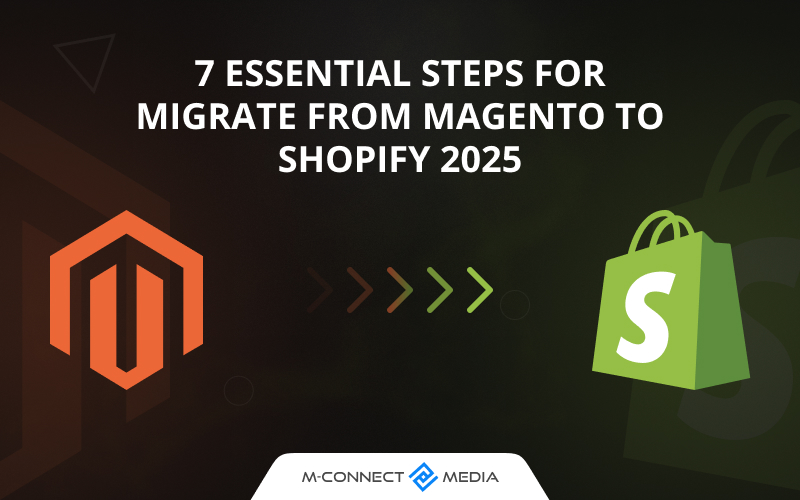
For many e-commerce companies seeking improved scalability, lower long-term maintenance, and simpler operations, migrating from Magento to Shopify Plus has proven to be a smart decision.
As of 2025, over 4.82 million websites run on Shopify, while Magento powers around 150 thousand. Shopify continues to attract merchants for its lower infrastructure demands and extensive app ecosystem.
While powerful and customizable, Magento often requires high development costs and specialized maintenance. Depending on how complicated your store is, how much data it has, and how much you change the style, moving to Shopify could cost anywhere from $2,000 to $10,000.
This makes it vital to plan every phase carefully to protect data and ensure business continuity. This blog outlines seven essential steps in the Shopify migration process, divided into three critical stages: Pre-Migration, During Migration, and Post-Migration.
It also covers benefits, challenges, data considerations, and migration methods, helping you make informed decisions for a successful transition.
Why Businesses Choose to Migrate From Magento to Shopify
Shifting to Shopify offers several practical advantages for business owners looking for easier management, better performance, and flexible scalability.
- Reduced Maintenance: Shopify handles hosting, updates, security, and infrastructure, reducing your need for a technical team
- Faster Development Cycles: Shopify’s themes and integrations allow for faster go-to-market
- Lower Cost of Ownership: Avoiding Magento’s ongoing server and development costs leads to more efficient budgeting
- App Ecosystem: Shopify supports thousands of built-in and third-party applications that can enhance store functionality
- 24/7 Shopify Supports: Direct access to a dedicated support team for troubleshooting and consultation
- Shopify Plus Options: For larger enterprises, Shopify Plus offers advanced features like multi-store management and API access
Key Considerations Before You Migrate
Before starting the migration process, several foundational decisions must be made.
- Evaluate Store Complexity: Your Magento store’s number of products, integrations, and custom functions can affect migration method and time.
- Define Business Goals: What are you hoping to achieve with Shopify? Better UI, easier management, and higher conversion.
- Platform Differences: To match your needs with the appropriate Shopify plan, you must compare Shopify and Shopify Plus.
- Data Sensitivity: Consider SEO history, customer privacy laws, and how different types of data will be migrated
Choose the Right Partner: A reliable Magento Development Company with Shopify integration experience can streamline your transition.
Common Magento-to-Shopify migration issues
Migration is more than just data transfer. It has an impact on your online presence, business operations, and user experience. Common challenges include:
- Theme Compatibility: Shopify does not support Magento themes, so new design work is needed
- App Replacement: Magento extensions may not exist in Shopify. You must find replacements or rebuild functionality
- Data Formatting: Inconsistent data structures between platforms can cause import errors
- SEO Performance: Improper handling of URLs, meta-data, and redirects can affect your search engine ranking
Inventory Syncing: For businesses running multiple sales channels, syncing inventory during migration can be complex
Types of Data You Can and Cannot Migrate.
When performing a Magento to Shopify migration, understanding what data can move and what may need to be reconfigured is essential.
Data You Can Transfer:
- Products: SKUs, names, descriptions, prices, images, categories, and inventory levels
- Customers: Names, emails, addresses, order history
- Orders: Past orders, order numbers, and statuses
- Pages: Pages with static content, like the Contact, Policy, and About Us pages
- Coupons and Discounts: If compatible, some discount rules can be recreated
Reviews: Customer reviews can be exported using apps or custom scripts
Data That Cannot Be Directly Migrated:
- Themes and Templates: Shopify requires a new theme structure
- Magento Extensions: These must be replaced with equivalent Shopify apps
- Custom Code: Platform-specific code and scripts will need rebuilding
- Admin Roles and Permissions: You must manually assign roles within Shopify
- Shopping Cart Data in Progress: Active carts cannot be migrated
Payment Gateway Settings: These must be manually configured
Magento to Shopify Migration Methods: Which One to Choose
Depending on your technical skill, budget, and business size, several methods are available to complete your Shopify Migration.
1. Manual Migration
- Suitable for small stores.
- CSV files for orders, clients, and products can be imported and exported.
- Time-consuming and prone to human error.
2. Automated Tools
- Platforms like LitExtension and Cart2Cart make it easier to shift your data smoothly.
- It saves time and makes sure that field mapping is correct.
- Ideal for mid-sized stores.
3. Hire Professionals
- Partner with an expert team offering Ecommerce Development Services.
- Recommended for enterprise-level stores or complex configurations.
- Combines customization, data integrity, and post-launch support.
You can also hire a Magento developer from a trusted Magento development company to support the pre-migration assessment and plan your Shopify integration smoothly
7-Step Guide for Magento to Shopify Migration
Now that the foundation is laid, let us break down the migration into seven essential steps divided into three stages:
Part 1: Pre-Migration
Step 1: Audit Your Existing Magento Store
Before initiating the Magento to Shopify migration, start by evaluating the current state of your Magento store. Conduct a detailed audit covering all your ecommerce platform’s essential elements.
- Review your analytics to understand website traffic trends, top-performing products, customer behavior, and bounce rates.
- Find out which products are doing well and which are not selling well. Review your customer segments and analyze purchase patterns to better plan your store’s future structure on Shopify.
- Look into all integrations, plugins, and third-party tools currently running on your Magento store. Decide which ones you will need to replace, eliminate, or recreate.
- If you use custom scripts or extensions, make sure to document them. This helps avoid missing any critical functionality post-migration.
- Most importantly, start mapping your current URLs and identify significant traffic pages. Make a list of all redirects you will need after the move.
- Preserving SEO equity is crucial, and planning for it at this stage helps ensure a seamless transition in search rankings.
Step 2: Plan Store Structure on Shopify
- Shopify operates differently from Magento, especially when organizing product collections and navigation. Understanding how Shopify handles collections, product tags, and attributes is essential.
- You will not have custom product types like Magento’s configurable or bundled products, so plan your catalog accordingly.
- Begin designing the structure of your new store. Think from a customer’s point of view. How will they search for your products? What filters would they expect?
- Reorganize categories, define clear tags, and plan navigation menus based on user behavior and search intent. This stage is also the right time to evaluate whether your business needs the standard Shopify plan or Shopify Plus.
- Think about the number of sales, automation, and support before you choose Shopify or Shopify Plus.
Step 3: Backup and Export Your Data
- Never proceed without a complete backup. Backup your entire Magento store, including product data, customer information, orders, reviews, and CMS pages.
- Magento offers built-in export tools, or you can use third-party extensions that export clean CSV files.
- Ensure all your export files are checked for accuracy. Clean up unnecessary data, fix inconsistencies, and verify all required fields are present. This ensures a smoother data import process later in the Shopify Migration Process, reducing the chances of failed uploads or mismatched content.
Part 2: During Migration
Step 4: Set Up Shopify Store
- After completing a pre-migration audit, set up your new Shopify store by creating a Shopify account and selecting the plan that suits your business requirements.
- Consider Shopify Plus for advanced functionality and better support for complex stores with significant traffic or multiple sales channels.
- Pick a theme from the Shopify Theme Store that fits your brand and what your customers expect.
- Customize the layout, colors, and fonts using Shopify’s built-in theme editor.
- Hiring a professional designer or Shopify development partner is recommended for businesses with specific design needs who can create a custom look that aligns with your existing brand while optimizing for user experience.
Step 5: Import Your Data into Shopify
- You can start importing your info now that your Shopify store is set up.
- Shopify provides a native import tool, but third-party tools like LitExtension or Cart2Cart are widely used for a more seamless and complete migration.
- These tools simplify the process by mapping Magento fields to Shopify equivalents, reducing manual work and errors.
- Data such as products, customer profiles, orders, images, and CMS pages can be imported accurately.
- Consider working with a Shopify expert or migration team if your Magento store is large and complex, with custom attributes or layered navigation. Professional help ensures accurate mapping and prevents loss of critical data during the migration.
Step 6: Set Up Integrations and Payments
- After your data is imported, reconfigure your integrations. Shopify supports popular payment gateways, shipping providers, tax calculators, and CRM systems.
- If you used third-party apps on Magento, check whether those providers are available on Shopify or if alternatives exist.
- Re-establish connections with tools such as email marketing platforms, inventory management systems, and analytics solutions.
- This step ensures your ecommerce store operates smoothly from day one on Shopify.
Part 3: Post-Migration
Step 7: Test Your Store
It’s time to test your Shopify business after the move is done. Before launch, every detail must be verified to ensure your new store delivers a smooth and consistent customer experience. Start by taking a careful look around your website:
- Product Pages
Carefully inspect all product listings. Confirm that titles, prices, variants, and product descriptions are correct. Make sure product images display clearly and are not broken. If you have custom attributes in Magento, ensure they have been mapped correctly.
- Shopping Cart & Checkout
Add multiple items to the cart, apply discount codes, and simulate different types of transactions. Confirm that taxes, shipping rates, and order totals are calculated correctly. Test orders using payment methods such as credit cards, PayPal, and other configured gateways. Check if the confirmation emails are triggered and received correctly.
- SEO Setup
Maintaining your SEO rankings is crucial. Review all migrated URLs and test 301 redirects from your Magento store to Shopify. Ensure meta descriptions, alt texts, title tags, and header structures remain intact.Seek help from Google Search Console to locate broken links or crawl problems.
- Performance
Check site loading speed using Page Speed Insights or GTmetrix tools. Test responsiveness on different devices and browsers to ensure consistent layout and functionality. Evaluate if image sizes are optimized and the design adjusts well across screen sizes.
- User Experience
Browse as a new visitor and test the entire journey, From homepage to checkout. Look for any friction points, unclear CTAs, or navigation issues.
After thorough testing and validation, you can confidently launch your Shopify store. But the work does not stop here. The post-launch phase involves monitoring performance, collecting user feedback, and regularly updating the shopping experience.
Conclusion
The migration from Magento to Shopify is a strategic move that simplifies operations, enhances user experience, and positions businesses for future growth. Shopify offers flexibility, cost-efficiency, and better customer engagement, while Magento can become resource-intensive.
This shift allows businesses to focus on selling and scaling, reducing overheads and streamlining processes. A clear Magento to Shopify migration checklist is necessary for success, and data integrity is crucial for SEO retention.
The Magento to Shopify integration ensures a smooth transition of product data, customer information, and orders, maintaining operational continuity. After launching, businesses must monitor performance, gather customer feedback, and optimize their store further.
Hiring a Magento developer or a trusted Magento development company can help with complex data migrations and third-party tool integration.
Frequently Asked Questions
1. What is the duration required to switch from Magento to Shopify?
The complexity of your store determines the timeline. Smaller stores may take a few days, while larger, more complex stores may require several weeks. Planning, data migration, testing, and the final launch are usually included.
2. Can I keep my domain during the migration?
Yes, you can keep your domain. During the migration process, you must point your domain to your new Shopify store after the transfer. To prevent downtime, make sure domain settings are configured correctly.
3. What happens if I require unique Shopify features?
Shopify offers an extensive app marketplace for most common ecommerce needs. Shopify Plus provides greater customization through API access, but it is available if you need specific functionality. Alternatively, you can hire a Shopify developer to build these features.
4. Is SEO affected during the migration?
SEO is one of the most critical aspects of migration. To avoid traffic loss, ensure proper URL redirection, preserve metadata (such as titles and descriptions), and audit for any SEO breaks after the migration.
5. Should I migrate everything at once or in stages?
This depends on the size of your store. Migrating everything at once is typically quicker and more efficient for smaller stores. For larger stores, consider migrating in stages, such as migrating the product catalog first, followed by customer data and order history.